

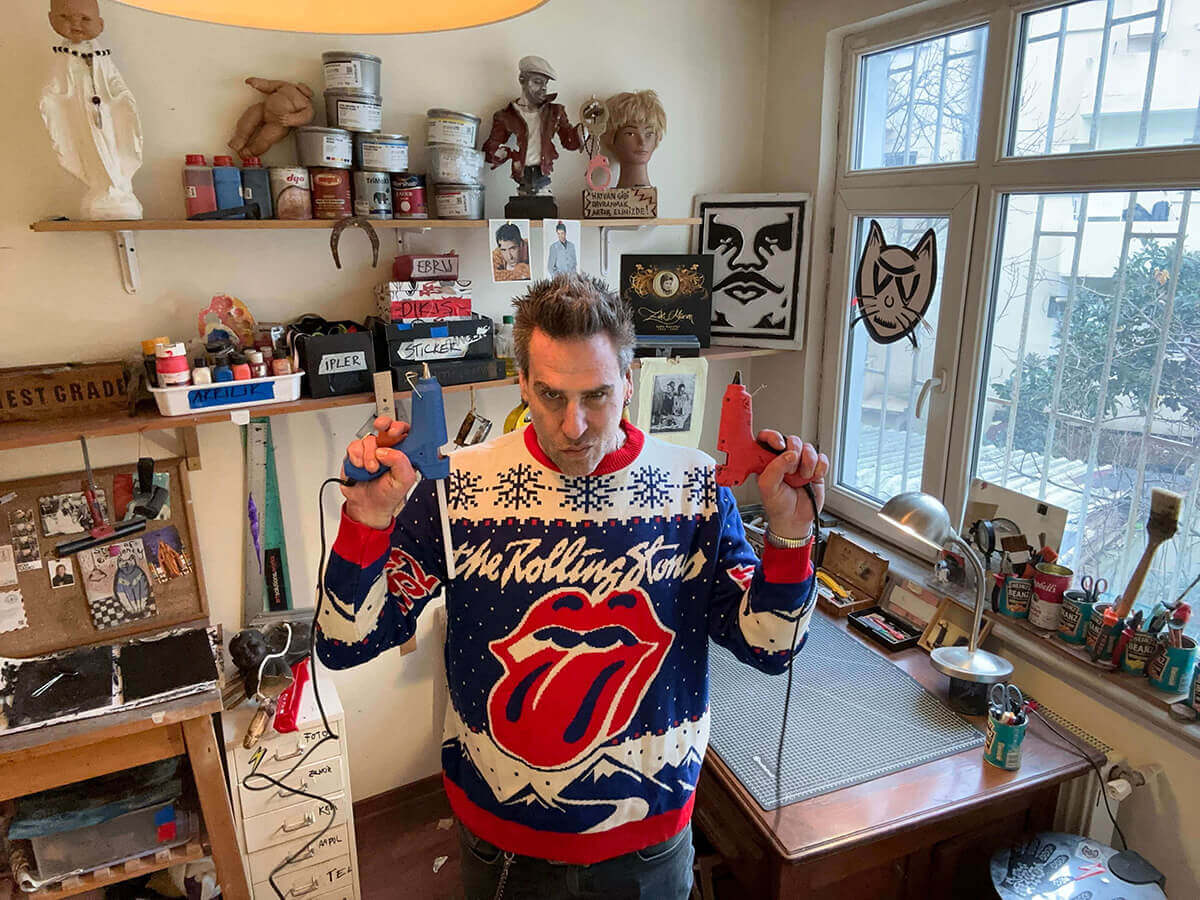

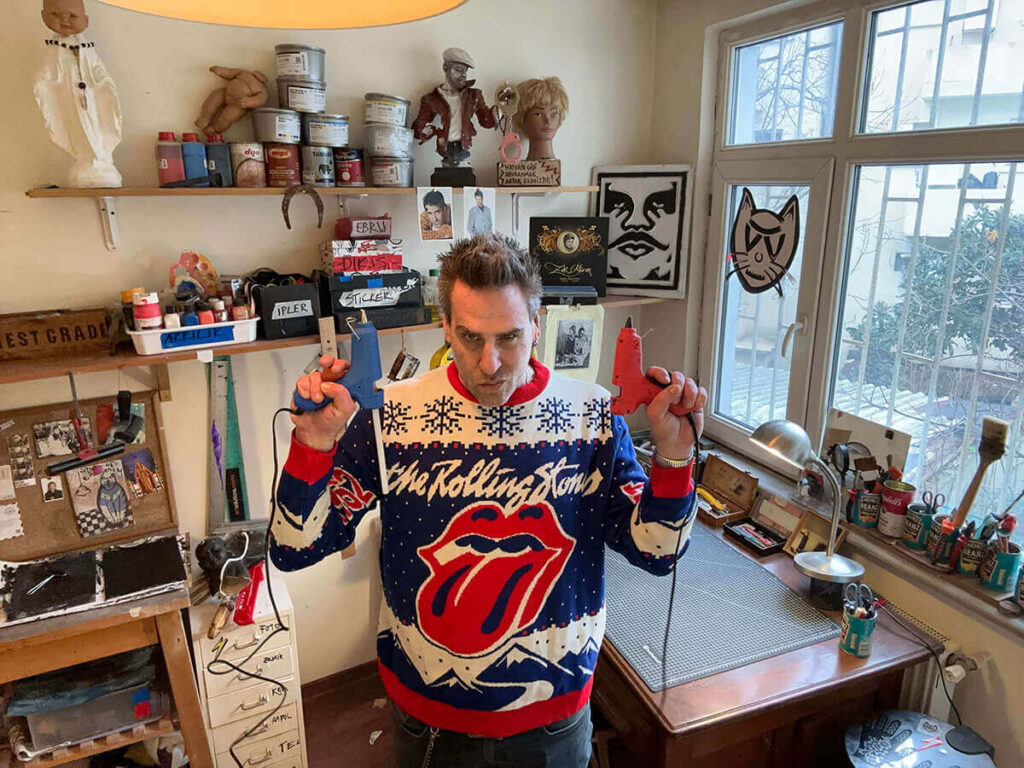
Can you tell us about yourself?
I was actually born in New York. I lived there until I was three, then from three to ten I lived in London. When my mother first asked, “Shall we go to Türkiye?” I was ten years old, and I knew nothing about the country. I didn’t even speak Turkish. In 1985, I came to Türkiye, and the moment I set foot here, I truly fell in love with it.
After finishing middle school and high school, I went back to the US, to Boston, and studied for four years at the Museum School of Fine Arts. At the same time, I was working nights as a marketing manager at a company. So I was completely immersed in art, while also being actively involved in the business world.
In 2000, actually exactly one month before 9/11—and I was in that building on that day, at the same hours—I decided to return to Türkiye permanently. I entered advertising, thinking about how I could combine my art and my business mindset, but my real goal was always to practice my art in Türkiye. Politically, culturally, and socially, Türkiye felt much more challenging to me. The way people express themselves indirectly, in layered and subtle ways rather than directly, felt far more interesting and powerful.
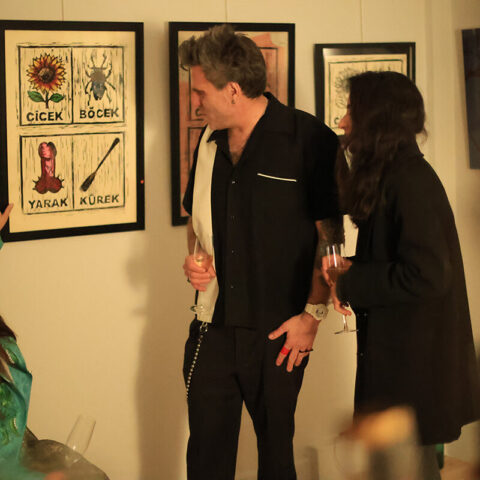
That’s why I first started with street art, while continuing to produce prints, since in my last two years at school I had focused mainly on printmaking. Techniques like lithography, silkscreen, and woodcut are part of my core visual language. In fact, the works I made on the street and the engravings I made in the studio were coming from exactly the same conceptual place.
I’ve now been in Türkiye for about twenty-five years. When I first arrived, I moved to Cihangir and I’ve lived there ever since. Back then, Cihangir wasn’t the “artsy, cool” place it is today. It was much rougher, more raw, more real. Now people assume, “If you’re an artist, you must live in Cihangir,” but I was there long before it became trendy. My relationship with Cihangir is not about being part of a trend, but about a bond that grew over time, rooted in love and a sense of belonging.
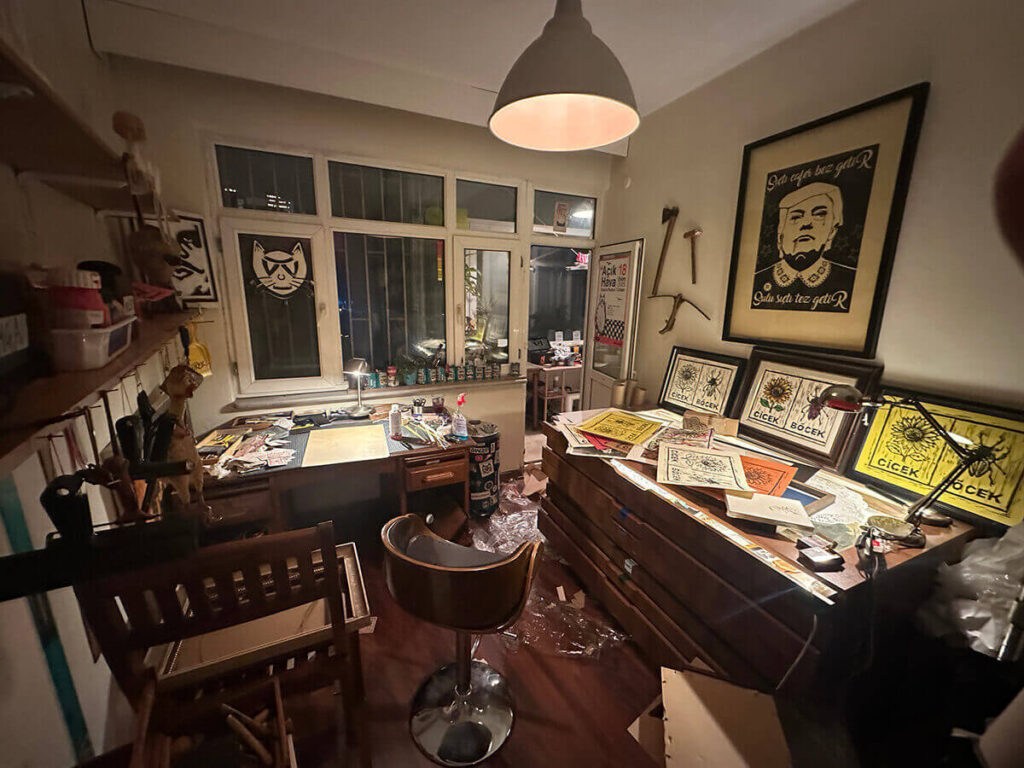
How did your current space become your studio? How long have you been working there?
I worked in the same studio for seventeen years, but unfortunately I was forced to leave. My current studio is in Tophane, and strangely enough, I love it much more. Being surrounded by local tradespeople, plaster ornament craftsmen, and artisans brought me back to my essence. Among all those craftspeople, I started to feel like I was truly where I belonged. Cihangir has changed so much that its old spirit is almost gone, so this new environment feels more real and sincere to me.
My old studio was almost three times bigger than this one. But over time I realized that it’s not just about square meters. My new studio has a garden, which is an incredible luxury for me. In the summer, I give engraving classes in the garden. Of course, we also work inside, but having that outdoor space completely changes the atmosphere. In Cihangir, finding a garden is almost impossible.
I have a quince tree and a lemon tree in the garden. I moved many extra tables from the old studio there, so it became a place where we can both produce and spend time together outdoors. What looks like a smaller space has actually opened up a much larger area of freedom for me, and that’s why I’m truly happy right now.
Besides production, what does the studio represent for you?
Alpert Atelier is not just a place where I make work. It’s a refuge where I gather my thoughts, stay alone with myself, and step out of the speed of time. Even if I don’t produce anything, just being there cleans my mind and brings me back to my center.
If your studio were a living being, a smell, and a sound, what would they be?
If it were a living being, it would probably be a patient but slightly stubborn animal. It takes time to get used to things, but once it does, it forms very strong bonds. Its smell would be a warm, familiar mix of old wood, dust, paint, and coffee. Its sound would be a calm background, detached from the noise of the outside world, occasionally interrupted by the small contact sounds of spray paint, printing ink, paper, or ceramic.
But at the same time, it would also be a loud, restless, slightly crazy organism. Questions like “What am I doing?”, “Is this really art?”, “Am I politically correct?”, “Should I be making bigger work?”, “Does making editions reduce the value of my work?”, “Is this art or just ‘sanat sepet’?” would echo within its walls. So it would be both calm and productive, and at the same time constantly questioning, arguing with itself, and objecting—a truly alive entity.
What turns a studio into more than just a production space?
It becomes a kind of zen area. For me, the studio is a place that constantly reminds me of who I am. Sometimes it feels like it whispers, “You should work more.” When I don’t produce, I immediately feel guilty, as if the studio itself is telling me, “Come on Ari, keep going, produce every day, improve yourself.”
So the mere existence of the studio pushes me forward and motivates me. At the same time, it is a complete zen space, because it’s where I feel safest, most relaxed, and most myself. It’s where I most clearly remember that art is what truly makes me happy. That’s why the studio is discipline, confrontation, and also a completely personal, private, and slightly sacred space for me.
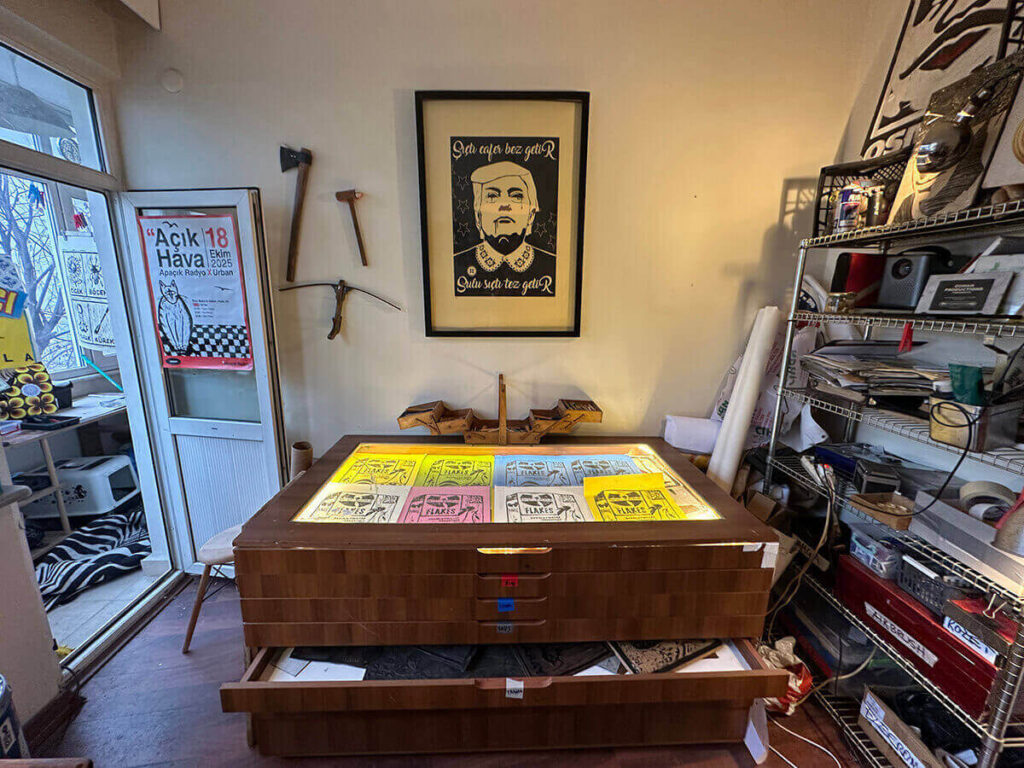
What is the most important invisible material of your studio?
The most important material of Alpert Atelier is not something physically visible. Since my studio is also an educational space, I’ve been giving one-on-one engraving lessons there for about fifteen years, as well as group workshops. So the most important material is actually the presence of the students—the energy they bring.
Teaching someone something new, watching how therapeutic the process of carving a plate is for them, sharing the excitement of the printing moment, and then facing the result together… that feeling, that sharing, that moment of applauding each other—that is the real power of the studio.
Without that energy, the studio would just be a space. With it, it becomes a living, breathing place.
Of course, patience and intuition are also essential, because everything needs time. Not every work happens immediately; some things need to steep, like tea. But above all, the most important material is definitely energy.
Are studios secret spaces? Are there things that disturb you during visits?
Studios are secret in a way because they contain unfinished ideas, fragile processes, and the artist’s most vulnerable state. What disturbs me most during visits is when works are judged as “final products” before they mature, or when the studio is perceived as an exhibition space. A studio is a place for questioning and experimenting, not for presenting finished answers.
If you gave your studio to someone for a day, who would it be?
I would actually choose someone completely unrelated to art: an accountant, a secretary, or a marketing director. Because I believe everyone has creativity inside them. Even a programmer is part of this—it’s an art form in itself.
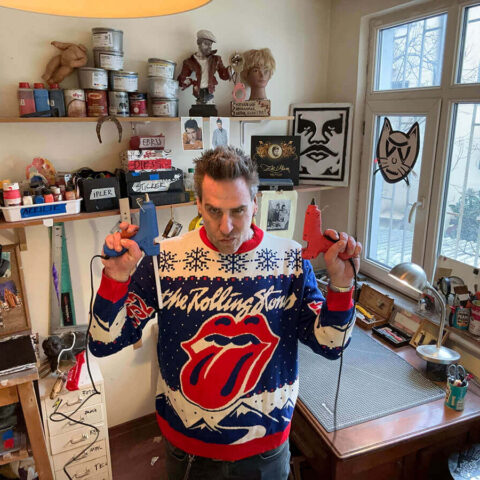
I see my studio as a playground, and I have lots of “toys,” meaning materials. Everything is there: glue, paint compressors, spray paint, watercolors, oil paints, nails, hammers—anything I might need. The biggest feature of my studio is that when an idea comes to my mind, I can immediately realize it.
I would want the person to enter the space with a neutral mind, with no expectations, and then I would just let them go. I believe they would definitely find something and produce something. Because every human being has a need to express themselves and a creative side.
Finally, what is a day like in your studio?
Sometimes it’s very planned, sometimes completely unplanned. In printmaking, an idea can take weeks or even months to become clear, and when it does, I have to work in a very structured and precise way. This is actually a bit against my character, because I’m quite impatient. At university, my professors directed me to printmaking for this exact reason, saying, “If you work more thoughtfully, more planned, and more programmed, you’ll express yourself much better.”
So sometimes I enter the studio with a clear plan and discipline. Other times it’s the opposite: whatever comes, comes. A political event, something I hear on the street, a sentence from my mother, a slang word, a feeling—and I follow it straight into the studio. Then the studio becomes more chaotic, more intuitive, more instinctive.
When I work on engravings, everything has to be clean, organized, and controlled. The technique demands it. Otherwise, it simply doesn’t work. So I actually use my studio in two different ways: one as a planned, disciplined, and controlled production space, and the other as an instinctive, spontaneous, and freer space of expression.


Wonderfully articulate portrait of an artist! I loved reading it. Thank you!