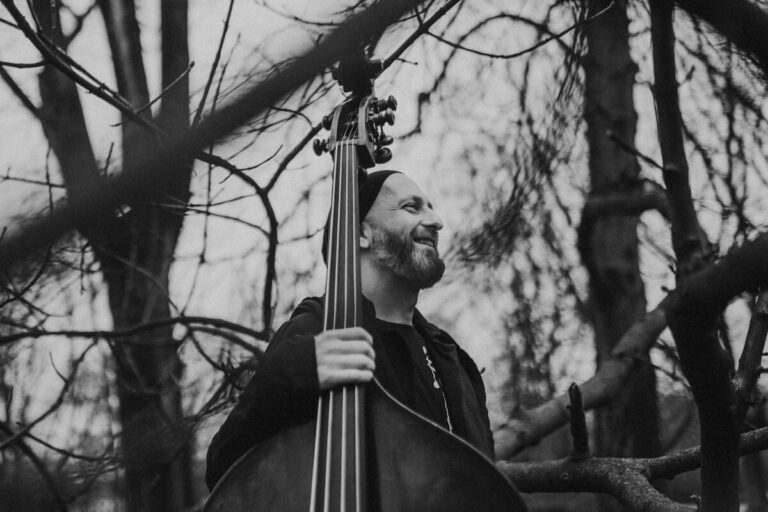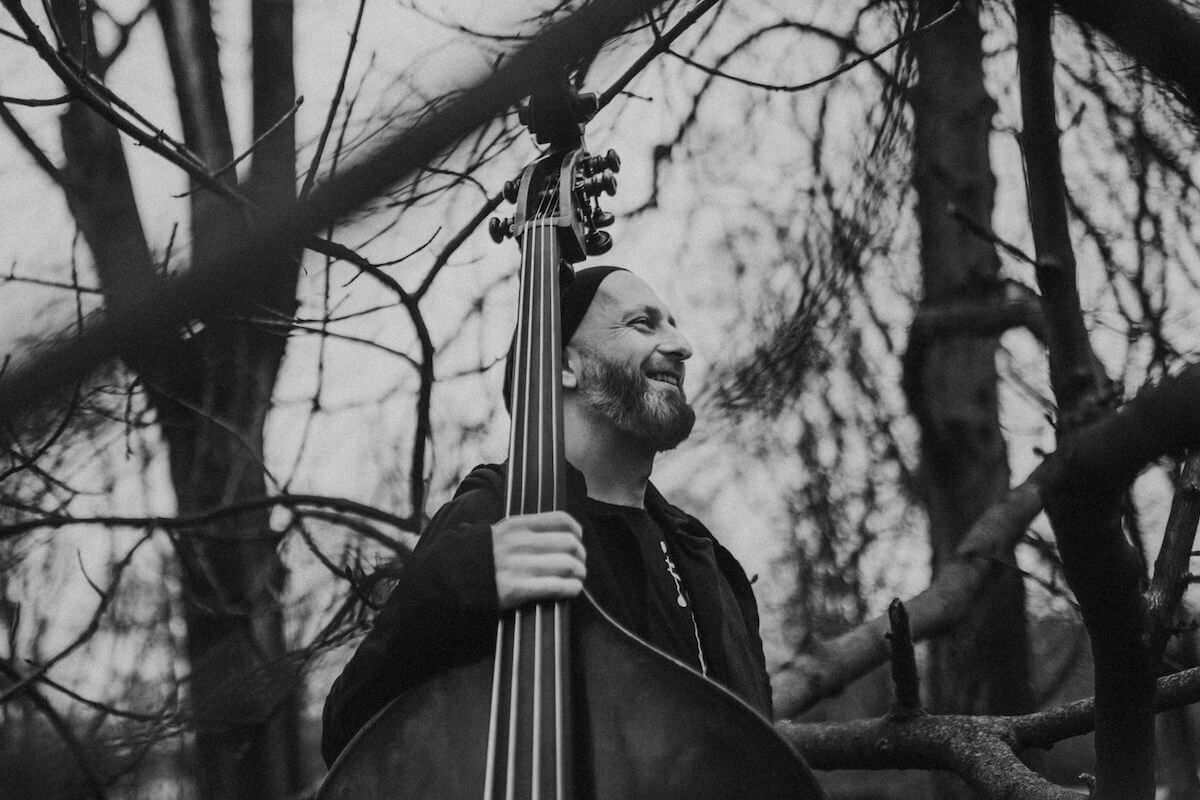
Polish double bassist, bass guitarist and composer Andrzej Święs is a musician whose work I have followed and enjoyed for quite some time. We first met for an interview with Gazete Sanat World in 2023, when we talked about his journey in jazz, the musicians he had worked with and Flying Lion, his newly released album at the time. I particularly enjoyed that interview and have continued to follow his work ever since.
Three years later, there is plenty to catch up on. Flying Lion went on to win the Fryderyk Award for Jazz Album of the Year, and Święs has since been involved in a number of new projects and collaborations. Among them is Ether, recorded with Piotr Schmidt and Sebastian Frankiewicz, an album centred on improvisation and the interaction between the three musicians.
Back in 2023, Święs told me that he had never been to Turkey. This November, he will finally make his first visit. As part of the 30th International Ankara Jazz Festival, he will perform at Doğan Taşdelen Çağdaş Sanatlar Merkezi on November 24 in Polish-Turkish Jazz Connection | Tribute to Janusz Szprot, alongside Sibel Köse, Jakub Mizeracki and Paweł Dobrowolski. On November 26, Święs will take the stage again with Mizeracki and Dobrowolski at the Turkish American Association in Ankara.
Ahead of his first concerts in Turkey, I caught up with Andrzej Święs once again. We talked about the past three years, Flying Lion and Ether, improvisation, his relationship with the double bass, the younger generation of jazz musicians and what he hopes to explore next. I hope you enjoy the interview.
Interview with Andrzej Święs
Andrzej, when we first spoke in 2023, we talked about your musical journey and Flying Lion, which had just been released at the time. Looking back at the past three years, what do you feel has changed most in you as a musician? Do you approach music differently today?
Firstly, I would like to thank you for the invitation to this interview. I’m glad we can speak again. These few years have passed quickly. A lot of things have happened in my life and also in my musical journey. As a musician I’m still trying to improve my skills working on technical and musical aspects of playing bass but also learning other topics linked to music world like being a leader, working on booking my own concerts but mainly playing with different bands as a sideman which I also do really like. Generally I’m still on the same path but maybe a bit older 🙂 and wiser, more experienced. I have realized that being a musician is a never-ending and really long journey, but a beautiful one.
When we spoke, Flying Lion had only just reached its listeners. The album later won the Fryderyk Award for Jazz Album of the Year. Did that recognition give you more freedom and confidence in what you wanted to do next, or did it also bring a new sense of expectation?
When I released my first solo album, “Flying Lion”, I didn’t expect what was going to happen next. I did it out of an inner urge to present my musical perspective on music, sound and composition, since I had previously been a bassist in other bands, where of course I could play myself, but usually, with a few exceptions, it was based on the interpretation of compositions other than my own. When I first received two Fryderyk Award nominations in the Artist of the Year and Album of the Year categories, I have to admit that I was very happy about it, but when I actually won the award, it was a total surprise for me. I took it as a sign that what I do as a musician is being noticed by listeners, but also within the music community, because it is an award from musicians and it has not gone unnoticed. This distinction is a sign for me that it is worth continuing and developing this path as a bandleader. However, it did not really affect the concert situation regarding the “Flying Lion” album – I am still trying to be my own manager and to work on booking concerts for this band. Generally, it was worth doing.
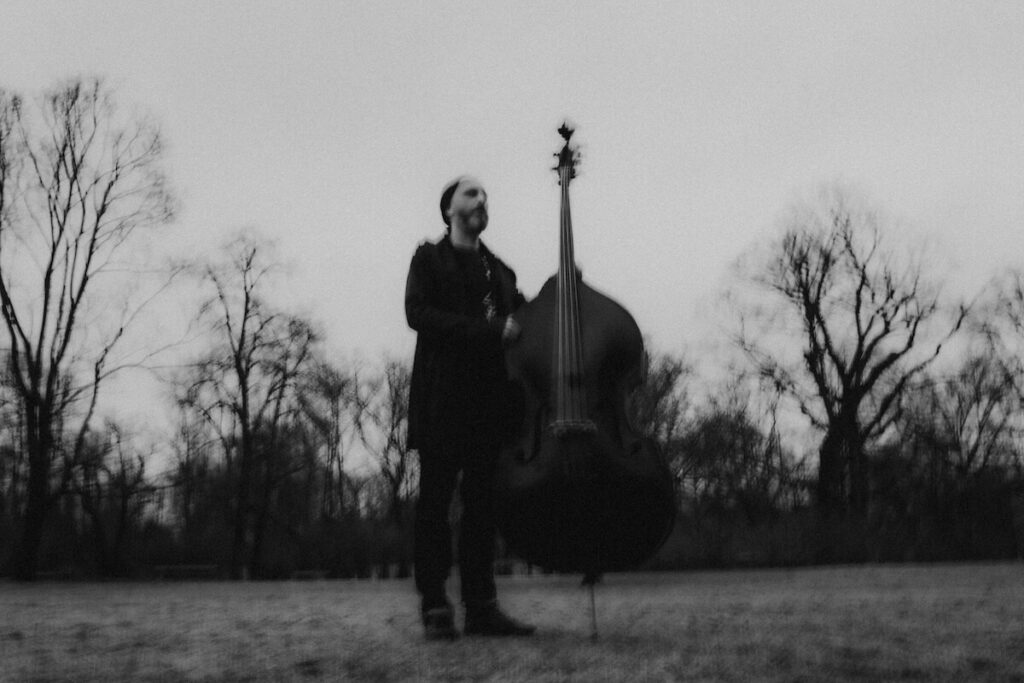
Ether, which you recorded with Piotr Schmidt and Sebastian Frankiewicz, is very much shaped by improvisation and the interaction between the three of you. When you make music without relying too heavily on a predetermined structure, how do you find the balance between freedom and uncertainty?
This album came about almost by accident; we were waiting for one of the musicians during a different recording session. We had about two hours to spare, so I suggested to my colleagues that we just play some free improvisation. The result can be heard on the album *Ether*. I personally enjoy taking part in improvisational projects—where there is no pre-determined form or harmonic structure—whenever the opportunity arises. Having played with Sebastian and Piotr for many years, and knowing that both are attentive listeners, I felt confident that we could create something interesting and that is exactly what happened. For them, it was likely a first-time experience. Playing music like this is largely about being in the here and now—it’s about trust, careful listening, and remaining open to whatever is unfolding at the moment. That is the whole secret: go with the flow. 🙂
Throughout your career, you have worked with musicians from different generations and very different musical backgrounds. At the same time, you continue to develop your own compositions and projects. How have these collaborations influenced your own musical identity over the years?
I feel lucky to have had this opportunity. Each constellation of musicians brings different music and this variety is priceless for me. I love to experience music in its wide spectrum because then I can grow as a musician. One of my dreams was to play with musicians who are better than me. Under those circumstances, I can clearly hear what my strengths and weaknesses are, so I know what to work on. My goal as a bass player is to support music no matter what style it is. Playing in different bands and different styles expands my musical horizons. I can compare it to travelling around the world: the more places you visit, the more experiences you gain.
The double bass is often thought of as the rhythmic and harmonic foundation of an ensemble, but in your music we hear a much wider range of possibilities for the instrument. How do you balance that supporting role with the need to express your own musical voice?
Indeed, I’m primarily an accompanist in a band, but I can still find a lot of freedom within this role. If I understand the rules of rhythm and harmony, I can use them according to my own ideas without disrupting the composition’s message. That’s why I like music with room for improvisation. Regarding my music on “Flying Lion”, it’s an album on which I play only bass guitar, using various processed sounds. The concept of playing in a trio with guitar and drums gave me more space to present my musical voice. I could play in a wider register and also use chords. I’m sure this album offers a rather wide stylistic spectrum of how I perceive music, both as an accompanist and soloist.
Jazz has always carried its history with it while finding new ways to evolve. How do you see the relationship younger musicians have with jazz today? Is there anything in the way this generation approaches the music that particularly excites you or makes you think differently about its future?
It’s difficult to speak for anyone, but I have some observations on this topic. The beauty of jazz also lies in its constant evolution, while improvisation remains its essence. My journey with jazz has always involved gaining experience playing with older musicians, and today’s younger generation is often more diverse. Some want to develop the concept of acoustic sound and broadly understood elements derived from bebop, while others start with elements of free jazz, ignoring what came before. Still others play only post-jazz rock music, which was already present in the 1970s, often thinking they’re discovering something new. Some even play rock music with brass instruments and claim they’re playing jazz. I don’t see this as a negative; I rather hope that listeners of the younger generation will be drawn into the world of jazz and begin to discover the earlier achievements of this music, reaching the source – then it will definitely be valuable. On the other hand, the younger generation is focusing on themselves, immediately wanting to build their own image as creators and artists. Over the years, I’ve seen a certain wave of fascination with acoustic, electric, and free jazz. There are periods when one style or another becomes more or less popular. It’s encouraging that there are still young people who treat jazz as a sacred sphere, wanting to explore the language and improve themselves as musicians, while others want to be famous as quickly as possible.
In our 2023 interview, you told me that you had never been to Turkey, and we also talked about your admiration for Turkish pianist Aydın Esen. Now you are preparing to perform in Turkey this November. How does it feel to finally meet an audience here? What are you looking forward to most about your first visit? If your Turkey schedule is already confirmed, please feel free to share the concert dates and venues with our readers.
My admiration for Aydın Esen continues. 🙂 I really like his latest album, “Fly”, recorded as a duo with drummer Bob Moses. I’m very excited about my first visit to Turkey; I’m happy to experience the culture. I can’t wait to taste the culinary delights. Furthermore, I’ll be playing two concerts: the first with the wonderful vocalist Sibel Kose—we’ll play together on November 24th at Doğan Taşdelen Çağdaş Sanatlar Merkezi (Contemporary Art Center), and on November 26th, I’ll be playing with guitarist Kuba Mizeracki and drummer Paweł Dobrowolski at the concert hall of the American Cultural Center. At the second concert, we’ll also be playing several of my compositions. Feel invited.
The past few years have been very active for you, both with your own projects and through your collaborations with other musicians. What are you working on at the moment? Are there any new compositions, recordings or projects that you can tell us about, and where do you feel your music is heading next?
It’s true. In recent years, several albums featuring me have been released, such as “Portraits” by the Adam Bałdych Quintet, released by Act Music. He’s an excellent and highly original violinist – the music is beautiful. Another interesting album, which also won a Fryderyk Award, is “Agma” by guitarist Szymon Mika. It’s interesting that Szymon is, in my opinion, one of the most unique guitar voices of the younger generation in Europe. It’s also wonderful that the line-up on the album is international. Alongside Szymon and myself, it features Song Yi Jeon, a phenomenal vocalist from South Korea; Oskar Török, a trumpeter from Slovakia; and Péter Somos, a drummer and percussionist from Hungary who is associated with the Berlin music scene. I recently completed a tour with this band and I can’t wait for the next concerts. Another important element is my collaboration with pianist Kasia Pietrzko, with whom I have been playing for about 10 years. We have created new music for piano trio inspired by the work of classical composer Sergei Prokofiev, and an album, “XIX/XX”, will be released soon. I am also working on my second album with the same line-up as “Flying Lion”. The compositions have already been written, and rehearsals and recording will take place soon. This will be a continuation of what was previously created.